Tuesday, October 19, 2021

A Carrot, Carat, or Karat?

Three homophones that sound the same but mean something entirely different used by prospectors, jewelers rockhounds and geologists include carrot, carat and karat. But only one provides vitamin-A for the weary eyes of the mineralogist.


The word from the middle French 'carotte' refers to the favorite food of that old rascal ‘wabbit’ and has nothing to do with carat or karat, other than geologists sometimes refer to the shape of a carrot to explain what a cross-section of a diamond-bearing kimberlite pipe looks like, but this is as close to diamonds that a carrot ever gets.


The KARAT

A 14.2 carat octahedral diamond, Kelsey Lake mine
Colorado. A lot of carats - but no vitamin A. Photo courtesy
of Howard Coopersmith.

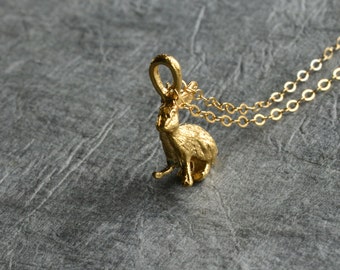
Karat on the other hand has little to do with rabbits, unless you purchase a gold pendant in the shape of a rabbit. Karat refers to purity of gold in jewelry. If you are a gold prospector, you should know how much gold, silver and other impurities are in that gold nugget you are standing on.


When you recover gold in a pan from a stream, it may be nearly pure and yellow or it may be electrum and a lighter shade of yellow. Natural electrum refers to gold as a mixture of gold and silver (>20% silver). Such gold is known as white gold. Electrum also has trace amounts of other metals. 


Thus, natural gold forms a solid solution of gold with other metals including silver, copper and nickel. It's rarely pure in nature (99.9% gold) unless it is chemically purified to produce a metal devoid of alloys. The purer the gold, the more malleable, soft, yellow, heavy and noble (resistant to oxidation and corrosion). But most gold is alloyed (combined) with other precious metals and base metals.


Pure gold is designated as 24-karat by jewelers: 24-karat is the purest gold at 99.9% (referred to as 0.999 fine). Being essentially pure, 24-karat gold is soft and best not used in jewelry where a wearer is active. Because of malleability of pure gold, it is not uncommon for such jewelry to indent or scratch.


There are 24 units or 24 karats in gold jewelry. Thus, if we were to take just one of these, we would have 1-karat gold. I don’t remember seeing a piece of jewelry listed as 1-karat simply because it would not be anything to brag about. One-karat would imply the jewelry is an alloy of 1-part gold to 23-parts alloy metals. This would mean that the percentage of gold in 1-karat would be determined by dividing 1 by 24 which would equal 0.0416666. It is traditional to round this number off to four significant numbers, thus we would have 0.042, the fineness of the gold. Now to get a percentage of the gold in 1-karat, simply multiply fineness by 100 = 4.2% gold in 1-karat jewelry.


A 7.5 troy-ounce nugget found in tributary of Rock Creek, 
South Pass greenstone belt, Wyoming.

Between these two extremes are the mixtures we often see in jewelry stores, such as 18-karat gold (18/24=0.750 fine) which consists of 75% gold. Another common mixture for jewelry is 14-karat gold (14/24=0.583 fine); (58.3%); and 12-karat gold (12/24=0.500 fine); (alloy with 50% gold). And, 10-karat gold (10/24=0.420 fine); (42% gold). Metals typically alloyed with gold include nickel, copper, palladium, manganese, silver, zinc, aluminum, iron, gallium, indium, ruthenium, platinum, palladium and rhodium. By using various alloys, gold can be hardened or have its color modified.


If we use nickel and silver as alloys with gold, these two metals tend to give gold a subtle white appearance to produce white gold. The nickel provides not only a white color, but also gives the metal strength. However, some people are allergic to nickel. In this case, palladium, platinum, or rhodium can be substituted for nickel. Platinum-group metals are inert like gold, thus they will not produce allergic reactions. Other white metals can also be used to alloy with gold such as manganese. But again, manganese can cause allergies in some.


Rose and pink gold are formed with copper as the alloy. The more copper, the deeper the pink color. The use of copper alloy was once popular in Russia and became known as Russian gold, which is now archaic, but the term still persists in the literature. Typically, rose gold is 18-karat gold containing 25% copper. Red gold is 12-karat gold with about 50% copper.


By adding zinc, one can produce gold that is less malleable and harder. Cadium is sometimes used for green gold. Other colors of gold jewelry include black, purple and blue. Purple or amethyst gold, is an alloy of gold and aluminum and is typically 18-karat gold and brittle. Blue gold is produced by adding indium or gallium to produce a 12- to 14-karat alloy. Adding certain metals to gold, the precious metal can become brittle, corrosive, and even tend to discolor skin. So karat is not a weight, but instead a measure of gold’s purity in jewelry. If we were to weigh gold, the precious metal is weighed in ounces or grams. Now here is another problem many people have, because there is a ounce, and then, there is an ounce.


TROY OUNCE

Weighing gold has caused much confusion. This is because there are two different ounces and few unfortunately state which ounce they are using, and not everyone uses the proper ounce for weighing precious metals.


Most people have the impression there are 16 ounces in a pound. True if you are weighing something besides precious metals. The avoirdupois ounce we use on bathroom scales to weigh ourselves is the unit used to weigh objects in most English speaking countries. It is from the Old French aver de peis interpreted to mean weight of goods.


But the weight of precious metals should be reported in troy ounces. The troy ounce was part of the Roman monetary system. Many assume this refers to the city of Troy, but it wa apparently named for the city of Troyes, France. The troy ounce is different from avoirdupois, and equal to 20 pennyweights (another weight measurement used by prospectors). There are only 12 troy ounces in a troy pound and it takes 1.09714 avoidupois ounces to weigh as much as a troy ounce. Thus, 1 troy ounce = 1.09714 avoidupois ounces.


A troy ounce also contains 31.1 grams while the avoirdupois ounce has 28.35 grams. Boy, this gets confusing!


1 troy ounce=31.1 grams


1 avoirdupois ounce=28.35 grams


GOLD USES

In the historical past, it was discovered gold could be purified by fire in a charcoal smelting furnace with common salt. Other methods for extracting gold and silver from complex ore include cupellation with lead and amalgamation with mercury. The Holy Bible makes reference to gold refining in Proverbs 17:3 “The fining pot is for silver and the furnace for gold”. A fining pot was a crucible used to recover silver.


Gold has been prized since earliest times for use in statues, icons, coinage and jewelry. Intricately sculptured objects and jewelry were found in tombs in Iraq and Egypt where Jason and the Argonauts searched for the Golden Fleece. In Biblical times, placer miners used sheep fleece to capture gold in primitive sluices


Fancy diamonds from the Argyle
mine, Australia. Photo - courtesy of
Rio Tinto.
Mining is as old as civilization. It is one of the oldest professions on Earth - as old as prostitution and politics, but an honored profession unlike politics. Gold’s rarity and characteristics resulted in the metal developing into a symbol of wealth and power. The rareness of gold is due to its formation in supernovae which produce sufficient energy and pressure to fuse atoms together to form gold.

In 2001, it was estimated that 2,870 tons of gold had been mined in the world: 80% was used in jewelry, much of which was sold to consumers in India, Europe and the US. In many Asian countries, such as India, Thailand and China, gold is important in religious ceremonies and social occasions. It is regarded throughout much of the world as the basis of financial value, particularly in developing countries.


The CARAT

The Carat is what we use to measure gemstones. One carat equals only 0.0066 troy ounces and only 0.2 grams. Thus, if you had a troy ounce of gold, this would be equal to 31.1 grams or 155 metric carats (152 troy carats). If you have one ounce of gold worth about $1800 and you wanted to compare this to a rare, pink, Argyle diamond worth about $1,000,000, you would get a good idea of how valuable some gemstones are. Such a one-carat rare pink would be worth about 156 times as much as an equivalent weight in gold. So, next time, think whether you have a carrot, carat or karat? 

Monday, October 18, 2021

Treasures from the Earth

Searching for giant jasper deposits
Granite Mountains, Wyoming.

Gemstones are timeless treasures of the earth that not only represent objects of beauty & intrigue, but also represent some of the more valuable commodities on earth. 


The extraordinary & satiated colors of many gems enhance their aesthetic beauty, while others produce extraordinary fire, birefringence or other attractive light interference. When mankind first picked a stone from the ground for its innate beauty rather than as a tool or weapon, this symbolized an important event in evolution. When this stone was given to another as a gesture of friendship or love: an unique quality of the human soul was manifested in sharing.


This evolution led to the search for similar rocks & minerals. The recognition of certain characteristics in a particular stone and its association with nearby specific rock types such as agate or jasper in grey to white rock (limestone) or other varieties of quartz in vugs of milky white and pink rocks (pegmatites), greatly enhanced the ability of the first prospectors to find additional stones of similar quality. Recognition of such mineral & rock associations signaled the start of the science of prospecting. As time passed, these primitive prospectors exchanged ideas & concepts that ultimately led to the science of economic geology


Recognizing rock and mineral associations & understanding regional geology is important in a search for new gemstone deposits. In this search, the successful prospector must not only focus on regional geology, but also on surrounding host rocks, mineral & rock associations & geological environments. Like any other mineral, gemstones grow under specific physical & chemical parameters. Some have innate characteristics that allow survival during weathering, erosion, stream-transportation & placer concentration. Gems may be found in igneous, metamorphic, and/or sedimentary environments & typically are associated with specific rock types & mineral suites. Unlocking these characteristics & clues can lead geologists to the discovery of additional deposits.


Gemstones are sought for personal adornment & have become prized possessions of men, women, kings & queens. Some of the more exotic minerals & gems represent the most valuable commodities on earth based on size. Few things on earth can compare to a fabulous gemstone. The rare pink Padparadscha sapphires from Sri Lanka bring high prices. But it is the blue sapphires that usually bring the highest price for sapphire. One 62-carat royal blue rectangular cut sapphire was valued at $2.8 million. In 2007, another blue Kashmir sapphire of 22.66 carats sold for US$3,064,000, or $135,216/carat! All for a polished crystal!


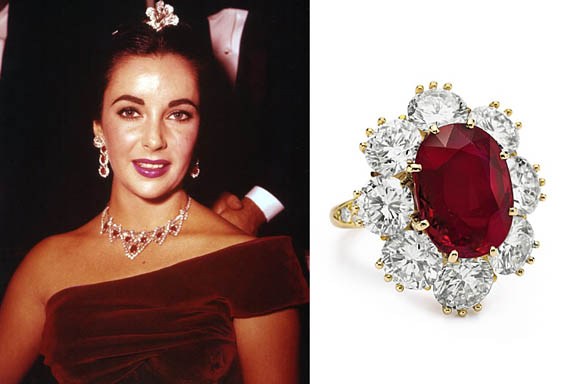
In general, rubies are more valuable. In 1998, a Burmese ruby of 15.97 carats sold at a Sotheby's auction for US$3.63 million. In 2005, Christie's of New York sold a near perfect, 8.01-carat Burmese ruby for US$2.2 million. In 2011, Elizabeth Taylor's jewelry was auctioned by Christie's: one notable 8.24 carat ruby sold for $4.2 million. In 2012, the Etcetera Burmese ruby sold at a Christie's auction for US$3.3 million, an astounding $551,000/carat.


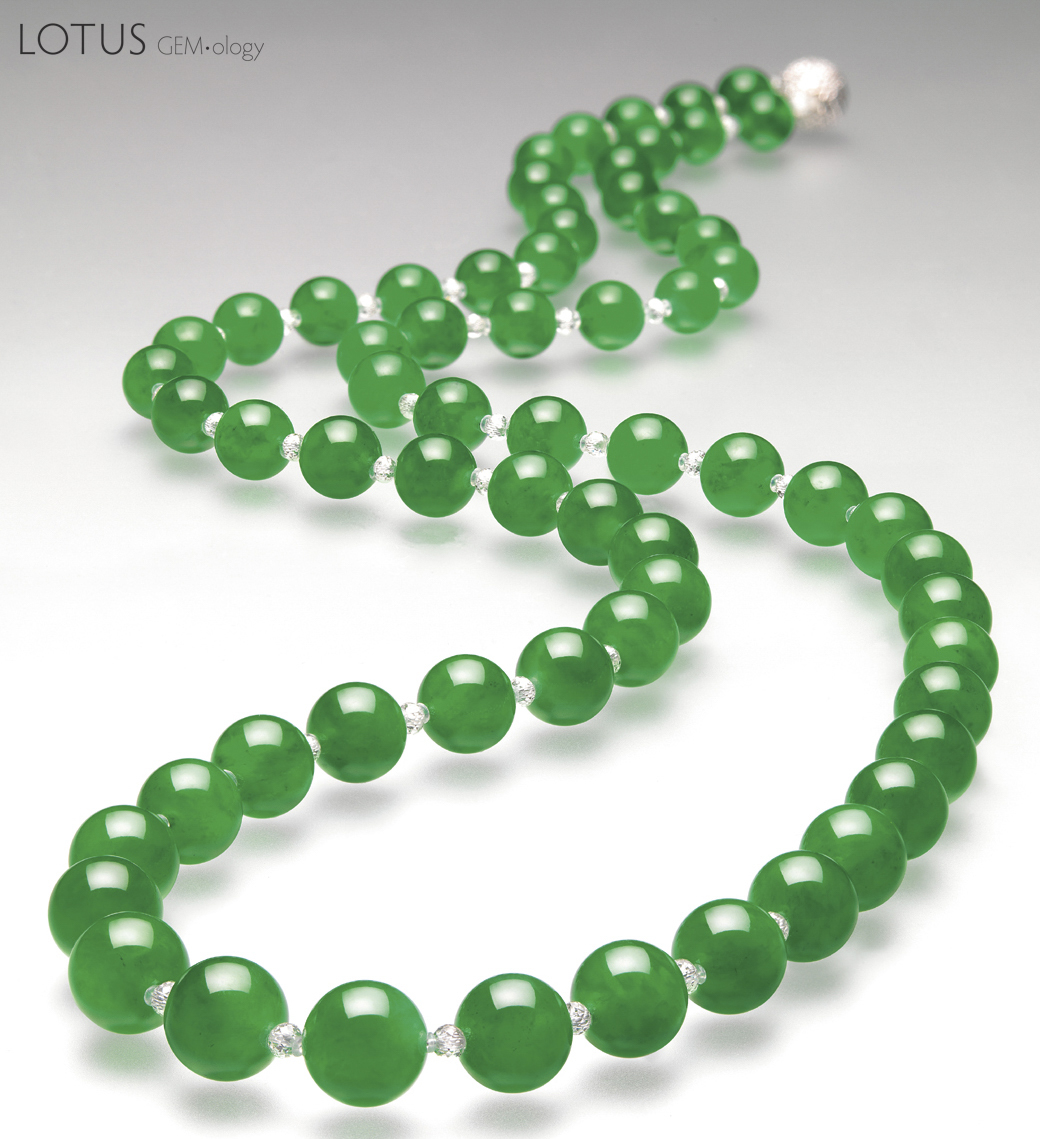
Some rough jade of unimaginable value include a 1.4-inch long jadeite cabochon that sold for US$1.74 million. In 1999, a jadeite bangle only 2 inches in length & 0.3 inch wide sold at a Christie's auction in Hong Kong for US$2,576,600. Even more incredible was a 27-bead emerald-green jadeite necklace, known as the Doubly Fortunate that sold for US$9.3 million in 1997. Periodically, enormous jade boulders and cobbles are found.


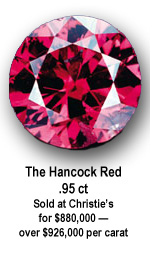
Some of the more valuable diamonds are red & pink. A small 0.95-carat purplish-red diamond (the Hancock Red) sold for nearly US$1 million. To put this in perspective, one carat weighs only 0.2 gram (0.007 ounce). At 2009 gold prices, this diamond was valued at >200,000 times an equivalent weight in gold - a common value for flawless pink diamonds. Another pink diamond of only 24.78 carats (large for a pink) sold for the highest price ever at a Sotheby's auction in  2010. The winning price - $46 million ($1.86 million/carat). This beat the earlier 2008 record price for the Wittelsbach-Graff blue diamond of 35.56 carats. Still, the most notable of all diamonds was the Cullinun rough, the largest ever found at a whopping 3,106 carats. The diamond was priceless and the finished gems embed the crown of England.


Gemstones have intrinsic properties that make them attractive: others stimulate our imaginations with unique qualities. The value of some gems has reached extraordinary heights due to ingenious marketing ploys such as a group of former industrial diamonds that are now coveted by the wealthy. These include brown diamonds, once considered to be almost worthless, but today are marketed as rare cognac & champagne diamonds. Yellow diamonds, also considered low-value stones in the past, are now marketed as Canaries. And we are now seeing chocolate diamonds - diamonds that would have brought a bitter taste to any gemologist a few decades ago. But people stand in line to purchase these once, worthless, diamonds. There is little question that some fancy diamonds top all other gems, in value. 


Other gems, such as green and blue zoisite,  were brilliantly marketed as Tanzanite. For the economic geologist, it is important to note how valuable gems are in comparison to other commodities. Few geologists understand the value or characteristics of gems - a direct result of geology faculty in our universities lacking understanding of gemstones, until they head to a jewelry store to buy a diamond for Christmas. 


Tapping into geological knowledge allows geologists & prospectors to predict where gemstones will be found and in what types of rocks will be their host. Such information can lead to significant discoveries, such as the diamond deposits of the Canadian Shield in the 1990s, the poly-gemstone deposits (iolite-ruby-sapphire-kyanite) in Wyoming, discovery of many incredible opal deposits in Australia, and one of the largest gold deposits on earth.


Gemstones found in anthills in Wyoming

This educational site is for you, the layman, prospector, treasure hunter, rock hound, dentist, mechanic, doctor, housewife, geoscientist, etc. It contains information & methods used to find diamonds, colored gemstones & gold. Over  3 to 4 decades, I found several hundred precious metal & gem deposits including a few that are world class. Some sat right under the noses of people for decades simply because they didn't look.  Diamond deposits were found adjacent to Interstates & US Highways in Colorado & Wyoming. World-class colored gem deposits with stones as large as Smart cars were found between 1995 & 2005 in Wyoming, and peridot gems were found at sites  examined and described by many geologists.


The largest colored gemstone deposit in the world may also have been found in 2005: estimated to have >2 trillion carats of gems!  A large opal-agate deposit was found adjacent to a US Highway within an petroleum field used by many people weekly - some opals >70,000 carats were identified in roads, in this field. More than a dozen ruby deposits were discovered including some of the larger rubies in the world simply by looking for rocks known as vermiculite schist, serpentinite and glimmerite. There are more deposits you will read about on this website & how using common sense, geology & geochemistry, led to their discoveries. Start looking at Google Earth and at geology publication archies - and with a little knowledge, you might find and King's ransom in gemstones.  

Sunday, October 17, 2021

The GemHunter Finds Gemstones Using Geology

Rocks and minerals are addicted to me! No matter where I go, they seem to find me. Sooner or later, they climb into my back pack using stealth. 


Corundum-vermiculite schist from Palmer Canyon, Wyoming, with two Hall of Fame induction rings sitting on a stock certificate from the 19th century.
Photo by the author.


Suddenly, I'm surrounded by rocks and minerals - they're everywhere! So, when I arrive home from an outing, I find gray, black, white, green, purple and other rocks and minerals hitched a ride - I have no idea what to do with them, so I place them in gardens and even show fellow rock hounds, geologists and grand kids. 


Years ago, I occupied a research office and lab in the Wyoming Geological Survey at the University of Wyoming in Laramie. People on the first floor were concerned by the weight of these hitchhikers on the second floor that always came back from the field with me. Maybe the next trip would bring the second floor crashing down  to the basement of the Dr. Daniel N. Miller, Jr. building. But, after decades, the rocks continued to pile up, and, the 2nd floor remained fast (with periodic creaks and groans). 


People claimed the 2nd story was starting to bowl: I wasn't convinced. So, I continued to bring those rocks and minerals that snuck into my top pocket, pants pockets, back pack and field vehicle as they increased in number like jackalopes on a spring outing. I would have to dig them out of their cozy hiding places, clean them, and label them before finding a place for each to reside in my laboratory.


I registered the minerals and rocks for therapy, hoping to help them find a cure for their addiction. It was prevalent not only to common quartz and sandstone, but also infected other rocks and minerals. They seemed to have the addiction with no discrimination to color or size. As they lined up for therapy, I noticed gold and gemstones that use to reside along I-80 and other highways. Some were from the middle of nowhere, others from mines, and many were from Wyoming, and others came from Montana, California, Colorado, Arizona, New Mexico, Utah, Nevada, Alaska, Africa, Australia and Canada. 


"You were in Eden, the garden of God; every precious stone was your covering, sardius, topaz, and diamond, beryl, onyx, and jasper, sapphire, emerald, and carbuncle; and crafted in gold were your settings and your engravings. On the day that you were created they were prepared". Ezekiel 28:13


Some specimens were frustrated because no one ever paid attention to them until I came to their villages. For example, in Albany County, Wyoming, tonnes of high-quality labradorite (spectrolite) were abused by the Wyoming Highway Department and were made into county, road-bed material for parts of US-34. And sitting next to one of these, was what appeared to be a couple of kimberlite (diamond) blows (eroded volcanic necks)! 


There were summers I spent in tents while searching old mines and ancient rocks. I would head out during the day and return to my campsite, just to find my tent filled with rocks and minerals. This happened at Radium Springs and Lewiston Lakes at South Pass - where I didn't see another person all summer. It happened at Bradley Peak in the Seminoe Mountains. And it didn't stop there. Everywhere I searched for old mines or mapped quadrangles, the afflicted stones, would sneak into the tent and into the back of my truck. 


Once I went to Australia. On my return, custom agents looked at me with enigmatic expressions as they opened my very heavy suitcases to find dozens of stowaway gold-bearing breccias and diamondiferous lamproites. Not sure how they got into my luggage? The same happened when I returned from Yellowknife Canada - bags full of diamondiferous kimberlite!


Then there were sojourns to Alaska and around the US. Dang, more rocks! While working as a consultant for WestGold, a company formed by Selection Trust and DeBeers of South Africa, gold and greywacke jumped into my bag and made their way from Donlin Creek to Anchorage by way of bush plane. Somehow, they found passage on a flight from Alaska to the University of Wyoming. 


Yes, I enjoy writing about their addiction to help others understand this problem. Not long ago, I submitted my 1,000th publication on this subject to various publishers.


Because this affliction was common among rocks, many geologists and rockhounds became curious and needed answers. Suddenly, I was in demand for lectures, field trips and excursions for local rockhound clubs and geological associations. Presented an AAPG certificate for best talk at a conference (I'm not even a petroleum geologist), presented Wyoming Geological Association's "Distinguished Service Award", awarded "Distinguished Speaker" at the Laramie Lyceum and "Distinguished Lecturer" at the University of Wyoming Department of Geology and Geophysics. And I was inducted into the "National Rock Hound Hall of Fame". Soon, many began to confess they and their pet rocks had similar addictions.


I once offered a couple of prospectors a case of beer to dig out collapsed mine portals so I could get in to map (prospecting old mines and finding new gold and gem deposits is better than sex - well, not really). I was the first person in some mines in 100 years. At the "Tabor Grand", I could see where a miner wrote in mud on the mine rib '1890'. Amazing it was still there and looked like it had been written yesterday. I mapped an old mine in California where miners in 1911 and 1939 did the same, but instead they burned numbers on the ribs (walls) with candles. One problem with mines, there are a lot of rocks and minerals in tunnels that suffer from addiction and want to go home with you.


I took leave each year to consult around North America. When I left the WGS at UW, I went to work as VP of US Exploration for an Australian diamond company. While working for the Aussies, I found a few hundred cryptovolcanic deposits in Colorado, Montana, and Wyoming; told them to pick up placer ground, and got them an actual diamond mine, but Bush's economic crisis of 2008 put them out of business. But, at least we found homes for many of the rocks. 

Barite Gems, Roses, and Crystals

Mine Hills blue barite gems, Shirley Basin, Wyoming ( Hausel, 2014 ). These gemstones form excellent, transparent blue, orthorhombic prisms ...